

Resources
The mission of WiR is to raise the profile of women in our sport and to provide a support and development network for those who enjoy and work in racing. Part of this is to support promotion at board level, and workplace culture from grassroots and beyond. Here you can read about progress and challenges in racing, wider sport and business through academic papers and impact reports from key organisations.
We hope you find the reports and information available here of interest. Women in Racing is important in supporting positive change. Let us know if you would like to see other reports and resources displayed here.
WiR Resources
See More
Motherhood & Horseracing: A Guide
June 14, 2025 | WiR Resources | 12.48 MB
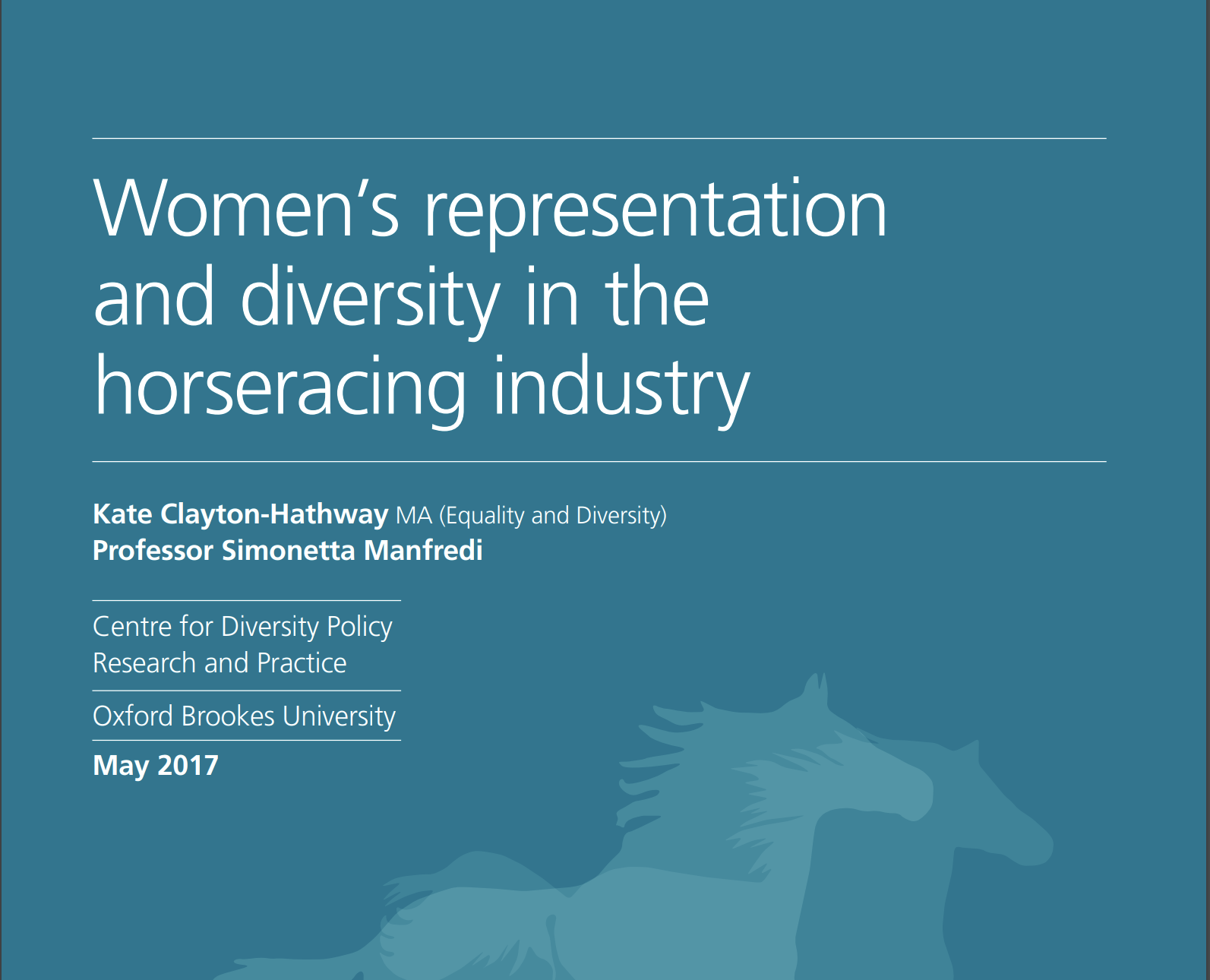
Women’s Representation and Diversity in British Horseracing
March 21, 2024 | WiR Resources | 958.34 KB
Women in Racing’s initial research piece which led to the creation of the Diversity in Racing Steering Group. This was undertaken by Dr Kate Clayton Hathway in 2017.
Download
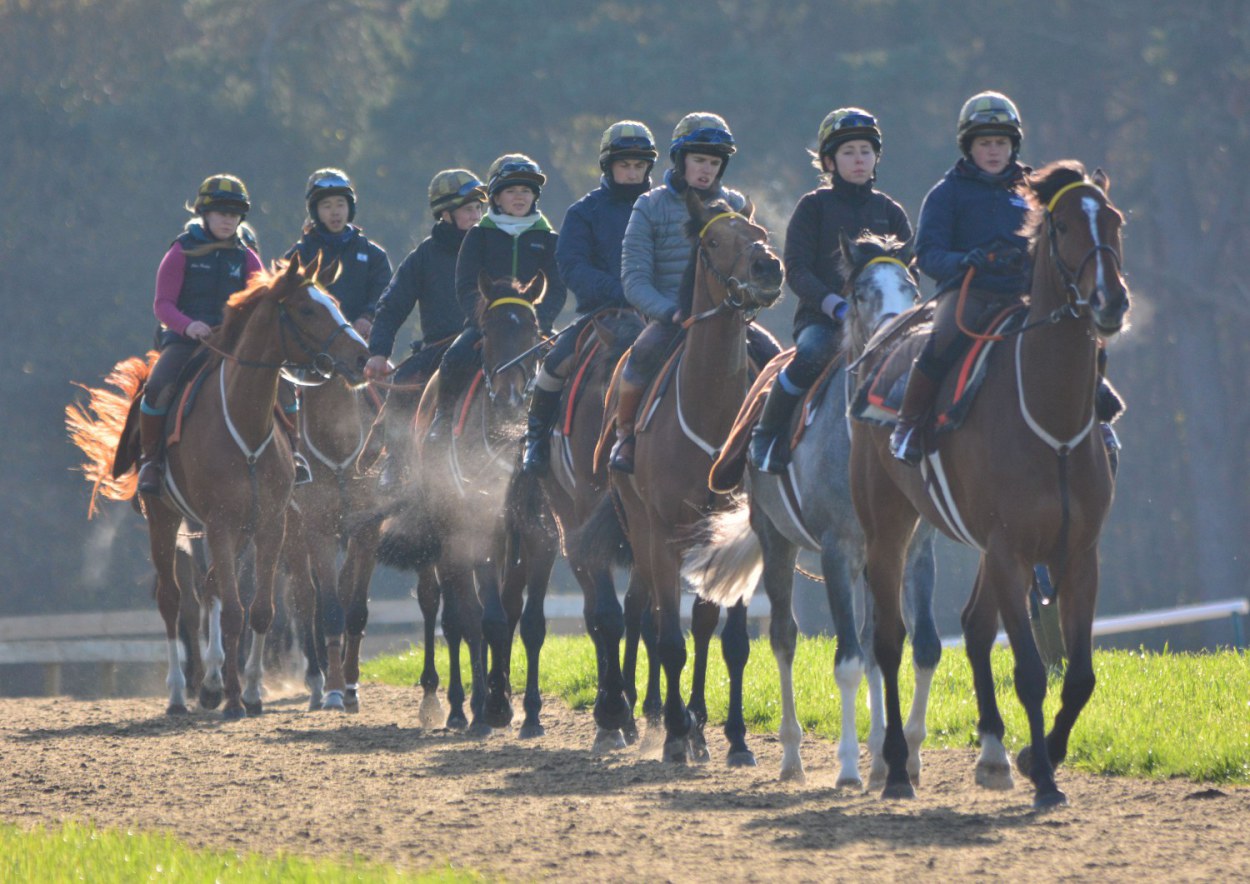
“RACING HOME” – a report highlighting the challenges faced by working mothers in the horseracing industry
September 11, 2023 | WiR Resources | 4.09 MB
DownloadEducation Resources
See More
2020-2022 Impact Report – Women in Sport
September 11, 2023 | Education Resources |
Women in Sport’s vision is that no one is excluded from the joy, fulfilment and lifelong benefits of sport. Yet all too often, women and girls are still missing out.
“Throughout the last two extraordinary years, Women in Sport has been a voice for girls and women who deserve to experience the joy and fulfilment of sport and yet all too often miss out.”
Stephanie Hilborne OBE, CEO
Is female jockey performance in Jump racing being underestimated by the betting public?
March 31, 2019 | Education Resources |
Female Jump jockeys may be being underestimated by the betting public despite outperforming male jockeys at the 2019 Cheltenham Festival, suggests analysis conducted at the University of Liverpool by PhD student Vanessa Cashmore.
Carrying out statistical analysis of over 1.6 million rides covering a 18-year period, the research indicates that a Jumps horse ridden by a female jockey at odds of 9/1 has the same chance of winning as a male ridden horse at odds of 8/1.
The findings are particularly noteworthy in the context of the 2019 Cheltenham Festival, when 14.3% of wins came from female riders despite receiving only 9.2% of the total number of rides available.
This project has been supported by Women in Racing’s bursary fund and the Racing Foundation. The analysis was conducted by Vanessa Cashmore, PhD student at the University of Liverpool and Work Based Learning Manager at the Northern Racing College.
Vanessa Cashmore, author of the research, said:
“This analysis seems to suggest there is a significant difference between the material performance of female Jump jockeys and the public perception of their capability.
“The betting public consistently underestimate these jockeys. This could be an indicator of negative public opinion about the ability of female riders but also ensures there is value to be found in backing horses ridden by female jockeys in Jump races.
“I hope this research can move us another step closer to altering attitudes towards female jockeys and more importantly, driving behavioural change.”
Neil Coster, Director of Studies for the Thoroughbred Horseracing Industries MBA at University of Liverpool Management School, said:
“It is great to see the continuation of this work started as a Thoroughbred Horseracing Industries MBA project. Vanessa has just started her PhD at Liverpool focused on horseracing and it will deliver insightful research on a number of key topics to better inform future decision making. We look forward to Vanessa continuing to share her research and to inspire our future Thoroughbred Horseracing Industries MBA students.”
Rose Grissell, British Racing’s Head of Diversity and Inclusion, said:
“It is interesting to understand how the betting public may perceive female Jump jockeys. The progression of female jockeys in both codes has been agreed as a key priority for the Diversity in Racing Steering Group and that includes exploring how we can change both conscious and unconscious attitudes.
“We already know from Vanessa’s previous research in this area published last year that female jockeys are just as capable as their male counterparts.
“We want to look at every stage of a female jockey’s career to see where barriers can be removed or better support can be implemented. Whilst the number of rides going to females is increasing, we still have a long way to go.
“As an example, an audit of female jockey facilities at each racecourse is currently being carried out by female jockeys themselves, so we hope to learn where improvements can be made on the racecourse.”
Tallulah Lewis, Women in Racing Chair, said:
“Women in Racing is delighted to be able to support Vanessa as she continues her ground-breaking research. Riding a racehorse requires a high level of skill and strength which are abilities that can be developed by both sexes, with opportunity being the crucial final component. Vanessa’s research makes clear that if women have the same opportunities as their male counterparts they can compete very successfully as jockeys, just as they can in any other sphere in racing.”
Rob Hezel, Chief Executive of the Racing Foundation, said:
“The Racing Foundation has funded management training, placements on the MBA and is now funding a PhD to help create a training and development pathway in racing that will stretch and support future leaders in the sport. This research is of particular interest as it supports work on diversity and inclusion, a topic that the Foundation has previously supported research in, the results of which were the catalyst for the current industry activity in this area. It is particularly pleasing for the Foundation to see the synergy gained from a variety of projects we have supported coming together to produce insight for future decision making.”
Notes to Editors:
1. Further data
In 2018 female jockeys took 9.5% of all available rides on the Flat and 5.7% of Jump rides, following an upward trend since 2014.
Using the five year period from 2014-2018 inclusive, the data trend-line would predict equality in share of rides in approximately 50 years’ time on the Flat (and in roughly a century in Jump racing).
Cheltenham Festival 2019
Although increasing, female jockeys remain underrepresented at the Festival.
Cheltenham 2019: 452 male rides (90.8%), 46 female rides (9.2%).
(150 different male jockeys and 15 different female jockeys.)
The proportion of wins by female jockeys at the festival exceeded the proportion of rides they received:
Female share of rides = 9.2%
Female share of wins = 14.3%
Female jockeys are underestimated by the betting public
A statistical model based on 588,767 rides in Jump races run between 2001 and 2018, results in the conclusion that female riders are systematically underrated by modern-day betting markets.
Analysis using a standard logit model for this exercise suggests that, when riding a horse who starts at even money, for example, a female rider can be expected to win the race 52% of the time (p<0.05). As the model has been specified over a large number of races, this points to the marginal effect of female riders being significantly different to that of a male on a horse starting at the same exchange odds. It should be noted that it is not appropriate to make inferences on the relative performance of male and female jockeys from these results, only the market’s underestimation of female riders.
No corresponding significant difference was observed within Flat racing.
The use of female jockeys varies widely between trainers.
In 2018, 46% of all trainers did not use a female jockey on any of their runners. Even when filtered to trainers with more than 100 runners, to represent medium and large sized yards, there were still 11.4% who did not use a single female jockey in 2018.
In both Flat and Jump racing the distribution of rides for female jockeys is skewed towards older horses. This skew indicates a reluctance of trainers to use female jockeys on their younger horses and may impact the performance of female jockeys.
Across the entire 18-year study period (2001-2018):
Flat
Female jockeys received 15.7% of all rides available on 12 year old horses but only 3.2% of rides available on 2 year old horses.
Jump
Female jockeys received 11.2% of all rides available on 14 year old horses but only 1.7% of rides available on young Jump horses (3, 4 and 5 year olds).
2. Vanessa Cashmore’s previous research relating to female jockeys can be found here.
3. About the University of Liverpool’s Thoroughbred Horseracing Industries MBA:
The Thoroughbred Horseracing Industries MBA is the only masters-level qualification in the world to be delivered through an exclusive partnership with British Racing. The programme combines the Management School’s expertise in sports business management, with the specialist equine knowledge of the University’s School of Veterinary Science. As an MBA programme it has the real business focus that management positions in modern horseracing demand. This is based on links with key sectors of the industry — from racecourses, horseracing governance and administration, trainers, owners, and breeders, to the gambling industry and the media. The programme supports both those working in the horse racing and associated industries and prospective career-changers, to develop their management and leadership skills. It is delivered through a combination of face-to-face and online teaching, that allows participants to remain in full-time employment.
Female jockeys as good as males, suggests Thoroughbred Horseracing Industries MBA study
March 31, 2018 | Education Resources | 507.42 KB
The performance of female jockeys is equal with that of their male counterparts, suggests a study carried out through the Thoroughbred Horseracing Industries MBA at the University of Liverpool.
Using detailed analysis techniques on data covering a 14-year period, the study suggests that, once the quality of the horses they are riding is factored in, the performance of female jockeys is essentially no better or worse than male jockeys.
This data shines a light on the fact that only 11.3% of professional jockey licences are held by female jockeys, and only 5.2% of available rides were taken by female jockeys during the period of the study.
The study is written by Vanessa Cashmore, Work Based Learning Manager at the Northern Racing College and a recent graduate from the Thoroughbred Horseracing Industries MBA. The MBA is run by the University of Liverpool with funding from the British Horseracing Authority (BHA), Horserace Betting Levy Board (HBLB) and the Racing Foundation.
Vanessa Cashmore, author of the study, said:
“This study strongly indicates that female jockeys are every bit as good as their male counterparts. I hope it helps to provide more opportunities for female jockeys, and also encourages more women to further their careers as race riders.”
The BHA has today reiterated its commitment to take steps to address the disparity between male and female riding opportunities, working with the sport’s recently-formed Diversity in Racing Steering Group.
Nick Rust, Chief Executive of the BHA, said:
“This study provides further evidence towards something that many in the industry have felt for some time – that there is no reason why female jockeys should not be considered as good as their male counterparts.
“We are proud that British racing is one of the few sports where men and women can compete on equal terms. However, if female jockeys are not being given the same opportunities as the men, then this cannot be considered as equality.
“Understanding why there are fewer female jockeys than male, and why those jockeys get fewer rides than the men – in particular in higher profile races – is something that we are determined to address, and will be considered by the sport’s dedicated Diversity in Racing Steering Group.
“Racing should be based on values of fairness and respect. We intend to ensure that these values underpin all aspects of the sport and that British racing provides fair opportunities for all of its participants.”
As part of the BHA’s ongoing commitment to address diversity issues, it is continuing to monitor the situation in France whereby France Galop has provided female jockeys with a weight allowance in certain races. The BHA will consider the results of the French initiative, the views of the Diversity in Racing Steering Group, the findings of Vanessa’s study and further statistical analysis to be undertaken internally, in the coming months, to determine any short and long-term steps that must be taken to improve equal opportunities for female jockeys.
Susannah Gill, spokesperson for the Diversity in Racing Steering Group, said:
“The research takes us one step closer to putting the tired argument about strength and capability on the scrap heap and focus on changing perception, on changing attitudes and most importantly driving behavioural change.
“The Diversity in Racing Steering Group was created following the release of a research into gender representation and diversity in British horseracing by Oxford Brookes University, in partnership with Women in Racing. The Group is seeking to champion the diversity and inclusion agenda in British horseracing by working collaboratively to enhance these vital areas and to be a forum for discussion and new ideas. By working together we can ensure our sport welcomes and supports talented people from a diverse background so we can all contribute, on the basis of equal opportunities, to the future success of British horseracing.”
Gemma Tutty, jockey and rider of almost 50 winners from over 600 career rides, said:
“This study confirms what we already knew and have been saying all along, that female jockeys can be just as good as male jockeys. I hope this study helps to persuade more owners and trainers to give female jockeys a chance in the saddle, especially in the bigger races.”
Neil Coster, Director of Studies for the Thoroughbred Horseracing Industries MBA at University of Liverpool Management School, said:
“The Thoroughbred Horseracing Industries MBA provides the skills, background and knowledge to help people prepare for senior management positions in the horseracing industry. This study, among a number produced by our first graduating cohort, demonstrates the value of our unique MBA.”
Rob Hezel, CEO of the Racing Foundation commented:
“I am delighted that the investment made in supporting the industry MBA is providing a positive return not just for the individuals completing the course but for the wider industry. The Foundation continues to support training, education and research and welcomes decision makers taking the opportunity to embrace the findings of research to improve the industry for both current and future participants. Vanessa’s work and previous research by Oxford Brookes University demonstrate that gender diversity is clearly an issue for Racing and it is great to see it being addressed in an open, informed and constructive way”.
Notes to Editors
Summary of the Study
A summary of the study can be downloaded below.
Please note: The full study has not yet been published. All of the studies from the Thoroughbred Horseracing Industries MBA will be published in due course.
Female jockey data
In 2016, 24% of the 778 individuals holding a jockeys licence – including professional and amateur jockeys – were female. This figure has remained consistent for the last 10 years.
11.3% of professional licences are held by females, including apprentice and conditional jockeys.
As of June 2017, 51% of the sport’s stable staff workforce was female, which has grown from 42% since 2010.
Nearly three quarters of students at the sports two main education centres (British Racing School and Northern Racing College) were female in the academic year 2016/17.
Over the 14 year period of data analysis, which incorporated 128,488 races and 1,255,286 individual rides, female jockeys received just 5.2% of rides (Flat – 6.5%, Jump – 2.9%). There was a slight upward trend in these figures across the data period.
Females accounted for 1.1% of rides in Class 1 Flat races, and 10% and 9.3% in Class 6 and 7 races respectively.
In Jump racing females accounted for 0.8% of rides in Class 1 races, compared to 3.8% and 5.4% in Class 5 and 6 contests.
DownloadHorse Racing Industry
See More
Racing Foundation 2022 Review
September 11, 2023 | Horseracing Industry |
Industry Appointments & Vacancies
See More
Racing Welfare seeks Welfare Committee Member – Beneficiary Representative
April 16, 2025 | Industry Appointments & Vacancies |
Racing Welfare is a national charity supporting all those working and retired from the British horseracing and breeding industry. We are seeking a Beneficiary Representative to sit on our Welfare Committee, who shares our vision that everyone from the horseracing and breeding industry and community feels supported and can thrive. We are looking for someone who has a passion for the work we do and who is familiar with the challenges of running a national organisation.
What will you be doing?
The Welfare Committee meet twice a year, usually via video-call but occasionally in person. All of our meetings are inclusive and welcoming, we value diversity of thought and encourage constructive challenge from our committee members and executive.
The meetings are currently routinely attended by trustees and committee members, the Chief Executive and the Director of Welfare Programmes. The meetings are held to monitor, review and develop the Welfare strategy, policy and compliance; to consider such individual welfare cases that might be brought to the Committee; to review and consider the impact of legislative changes; and consider any current issues or challenges facing this area of the charity, provide advice to the main board to help assist with high level decision making.
There will also be the requirement to undertake a committee member induction which we anticipate being a one-off one-day commitment. Each year, in addition to the committee meetings we anticipate another two days commitment would be required.
We invite committee members to join the Charity for an initial period of three years with the possibility of Trusteeship after one year.
We are particularly interested in hearing from those who have:
We are seeking to add to the expertise that we have on the Welfare committee, through an enthusiastic individual who is looking to develop their own skills and experience and has:
- Over three years’ experience working in the horseracing industry.
- A passion for supporting and representing the people who make racing happen.
- First-hand experience of welfare services within the sport, with a desire to share that perspective.
- A strong interest in the personal and professional wellbeing of racing’s workforce.
- A commitment to shaping and contributing to a long-term welfare strategy for the industry.
Please note, as this post will involve governing and advising on services that have direct contact with young people and vulnerable adults alongside some work of a sensitive nature it will be subject to a satisfactory, enhanced DBS disclosure. We also make checks on staff working with vulnerable adults and young people against the DBS barred lists.
What difference will you make?
Demand for the Charity’s services is higher than ever. The Charity continues to review, improve, and expand a large portfolio of welfare and wellbeing services which make a significant difference to the lives of individuals working in horseracing, their employers, the horse racing industry and in turn, communities and society. You will be part of this team, providing crucial advice to help shape the welfare strategy ensuring the charity continues to deliver high quality and impactful services. If you’re passionate about racing and the people who power it and you want to make a difference, we’d love to hear from you.
What is in it for you?
You will enjoy working alongside and learning from an inspiring and knowledgeable team of executives, committee members and trustees. You will have the opportunity to develop your board member skills and there may be opportunity to progress to a trustee position after 12 months.
How do you apply?
Download the candidate pack here.
You can either:
- Send a covering letter and CV by either post or email to the addresses detailed below.
- Send a short video telling us why you are interested in the role, your relevant experience and what you feel you can bring to the role.
Application addresses:
By Post: Lissie Mitchell, Racing Welfare, 20b Park Lane, Newmarket, Suffolk, CB8 8QD
By email: lmitchell@racingwelfare.co.uk Applications will close on 9th of May 2025.
This post is exempt from the Rehabilitation of Offenders Act 1974 and therefore applicants are required to declare:
- All unspent convictions and conditional cautions
- All spent convictions and adult cautions that are not protected (i.e. that are not filtered out) as defined by the Rehabilitation of Offenders Act 1974 (Exceptions) Order 1975 (as amended in 2020).
Racing Foundation seeks new Trustee
April 16, 2025 | Industry Appointments & Vacancies |
The Racing Foundation is seeking a new Trustee to join its Board from July 1, 2025. To date, the Foundation has given nearly £40million of grants to support charitable purposes associated with the horseracing and Thoroughbred breeding industry.
This is an exciting period to join the Foundation as it enters its new three-year strategy for 2025-2027 and further develops its role within the sport to ensure it has a positive impact in its key areas of focus – equine welfare, racing’s people and ESG (including social impact, social licence and environmental sustainability).
The Foundation is looking for someone who has a strong empathy with its charitable purpose. An interest in racing is essential, as is some prior experience of working within a charitable environment, either as a Trustee, volunteer, or employee. At this time, one or more of the following experiences, knowledge and professional backgrounds would be of particular relevance to the role:
- – Experience and/or knowledge of grant-making.
- – Experience and/or knowledge of environmental sustainability.
- – Experience and/or knowledge of social impact/social licence.
- – A voice that represents the next generation.
The full advert and role description can be found on the Racing Foundation website via this link. Please do share this link with anyone within your organisation who might be interested, or with your members where appropriate.
Community Engagement Officer (Thoroughbred Stud & Breeding)
June 3, 2024 | Industry Appointments & Vacancies |
Community Engagement Officer (thoroughbred stud & breeding sector)
Role: Community Engagement Officer (thoroughbred stud & breeding sector)
Based in: National (home-based)
Hours: Full time 35 hours per week
Contract: Two-year fixed term
Racing Welfare is looking for a person with experience of the thoroughbred stud and breeding industry to drive forward an exciting community engagement programme for the sector. The core purpose of this post is to raise awareness of and promote Racing Welfare’s wellbeing support services across this specific sector of the horseracing industry. The community engagement officer will work closely with the thoroughbred stud and breeding community to ensure the perspectives of those working in the sector are included in the development of the charity’s services and community work, as well as increasing awareness of and accessibility to support.
The new postholder will have a deep knowledge and experience of the thoroughbred stud and breeding sector. They will be passionate about improving access to support services, particularly for those living and working in rural and harder to reach locations. We are looking for someone who is a highly motivated and confident self-starter, an all-round ‘people person’ who can collaborate with a wide range of individuals and organisations. Ideally the postholder will have experience of attending bloodstock sales and events, possessing the ability to network and maximise these events as opportunities to engage with a variety of stakeholders. Excellent communication and confident presentation skills combined with the ability to manage projects and create written reports to evaluate the impact of this work are also desirable.
We encourage applications from those who are knowledgeable and passionate about this sector but who feel they may not meet all the requirements of the person specification, as training and support will be offered to the right person.
Reporting to the Head of Community Engagement you will be a key member of the community engagement department here at Racing Welfare. You will work closely across our welfare, fundraising and communications departments, and at a national scale across the thoroughbred breeding sector and wider horseracing industry. As such, a full driving license and willingness to travel are essential for this role.
Please ensure your covering letter explains why you are interested in this post and what it is that makes you the ideal candidate, taking care to highlight any previous and relevant experience.
Closing date Monday 17 June, 2024.